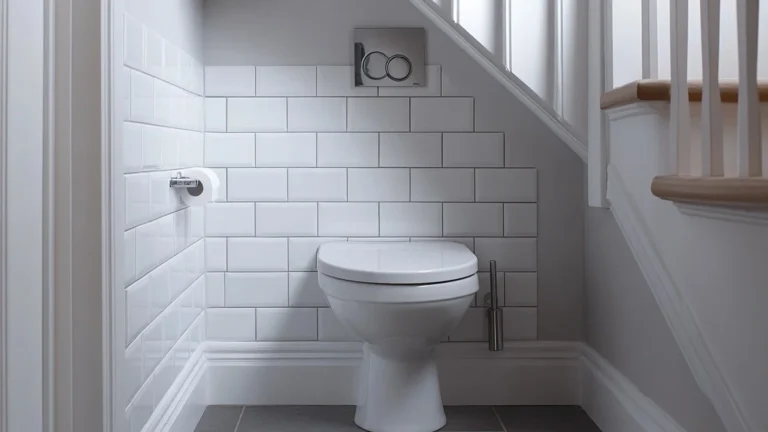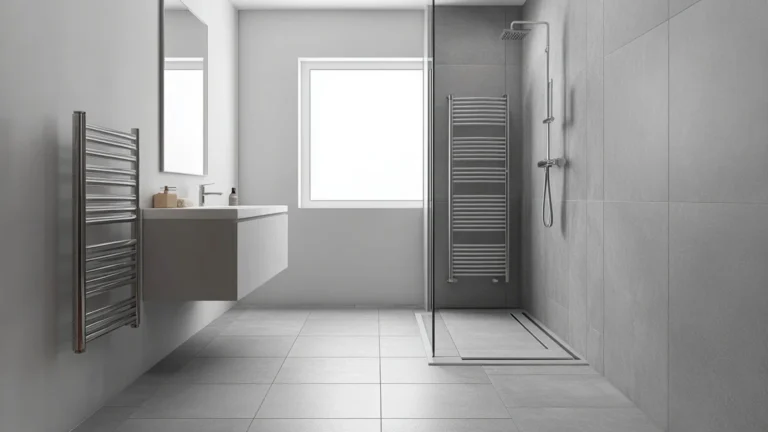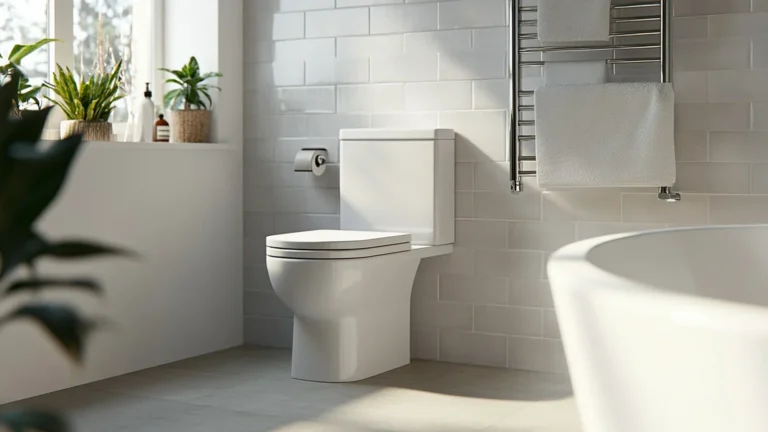
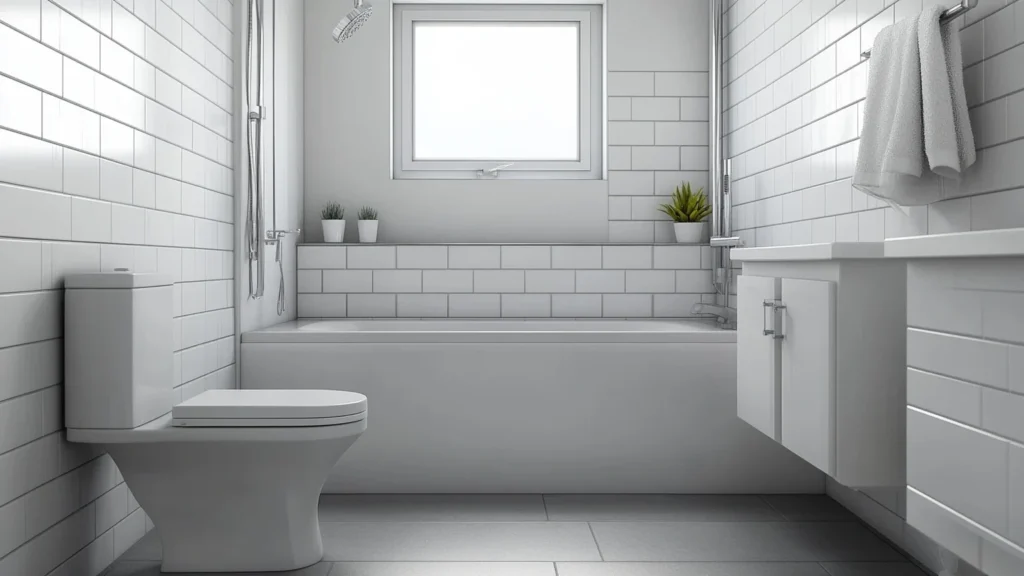
A rental property bathroom has a different job from one in your own home. It must look good enough to let quickly. It must survive tenants who did not choose the fittings. And it should need few call-outs between tenancies.
These goals usually pull the same way. The choice that lasts often looks good and costs little to keep up.
If you rent a home rather than own one, you need your landlord’s written permission before any work. Landlords also have safety duties, which we cover below.
Durability matters most
It is tempting to fit the lowest-priced thing that looks fine. That is often a false saving. A plumber attending twice costs far more than you saved on a tap.
A better rule is to spend where a fault costs a lot and save where it does not. A good thermostatic shower valve, a solid brass tap and a well-made toilet fill valve cost more once. A budget vanity that looks the same in photos adds nothing in call-outs.
Pick current models that shops stock. When a part fails in three years, you want a spare the same day. You do not want to replace the whole fitting.
What tenants notice
Tenants judge a bathroom fast. They look at how clean it is, how bright it is and how the shower looks. They do not count grout lines.
A bright, neutral room with a proper shower lets faster than a stylish one with a bath mixer and dim light. Get these basics right and you cut empty weeks.
Storage matters more than landlords expect. With nowhere to put things, bottles end up round the bath. That looks poor at the next viewing.
Surfaces that survive
Tile the shower area to the ceiling. Add at least a splashback elsewhere. Painted walls in a wet area need redoing between tenancies, every time.
Large tiles mean fewer grout lines. Grout is what stains. Less of it keeps the room clean for longer.
For floors, think about good vinyl or rigid core flooring instead of tile. It is warmer and cheaper to replace. It will not crack if something heavy is dropped.
Sealant is small but it shows at viewings. Silicone round a bath or tray stains within a couple of years. Cut it out and redo it between lets. It takes an hour or so and makes an old room look cared for.
Ventilation is the item that repays most
If you spend on one thing, make it the fan. Most damp and mould disputes trace back to poor ventilation. They cost time as well as money. The GOV.UK guidance on damp and mould in rented homes shows why landlords should take it seriously.
A fan of the right size, ducted outside, with a run-on timer, stops the problem. A humidity sensor is a useful extra. It runs the fan when the room needs it.
Duct the fan through a wall or roof, never into a loft. Keep the run short and straight. It is the dullest line on the quote and the one that saves the most. Fan wiring should be done by a registered electrician.
Showers and hot water
A thermostatic shower valve is the right choice in any rental. It keeps the heat steady. It cuts the flow if the cold water fails. That is close to essential where tenants may be vulnerable.
Electric showers work well in rentals, especially in shared houses. They run apart from the boiler, so one fault does not leave everyone without a shower.
Whatever you fit, keep the model common. Keep the shut-off valves easy to reach. A shower you can swap in an hour is worth more than one that needs tiles removed. If a job involves gas, use a Gas Safe registered engineer.
Bath or shower is a common question. It depends on who you let to. Family lets and long tenancies suit a bath, because families with young children often rule out homes without one. Studios and flats for young professionals rarely need one. A walk-in shower looks better and takes less room.
HMOs and shared houses
A house in multiple occupation (HMO) has extra rules. These include minimum standards for how many bathrooms and toilets each group of tenants gets. Councils set those standards, so they vary.
Licensing varies too. Larger HMOs need a licence across England. Many councils add schemes for smaller homes.
Checking what applies is the landlord’s job. The GOV.UK page on HMO licences is the place to start. Your council’s housing team holds the local standards.
Safety duties that touch the bathroom
Landlords have safety duties for rented homes. The GOV.UK guide to a landlord’s safety responsibilities lists them. They include regular checks of the electrics, with a report for tenants.
Bathroom electrics are in a restricted area, so inspectors look closely. A new circuit for a shower or fan counts as notifiable work. Keep the certificates with the property file.
Water systems need a risk check for Legionella. For a typical home it is simple, but not optional. Water left standing in pipes is the usual risk. Run the taps before a new tenancy to clear it.
Planning for the next ten years
Picture the room five tenancies from now. Which parts will still look fine? Which will you have replaced twice?
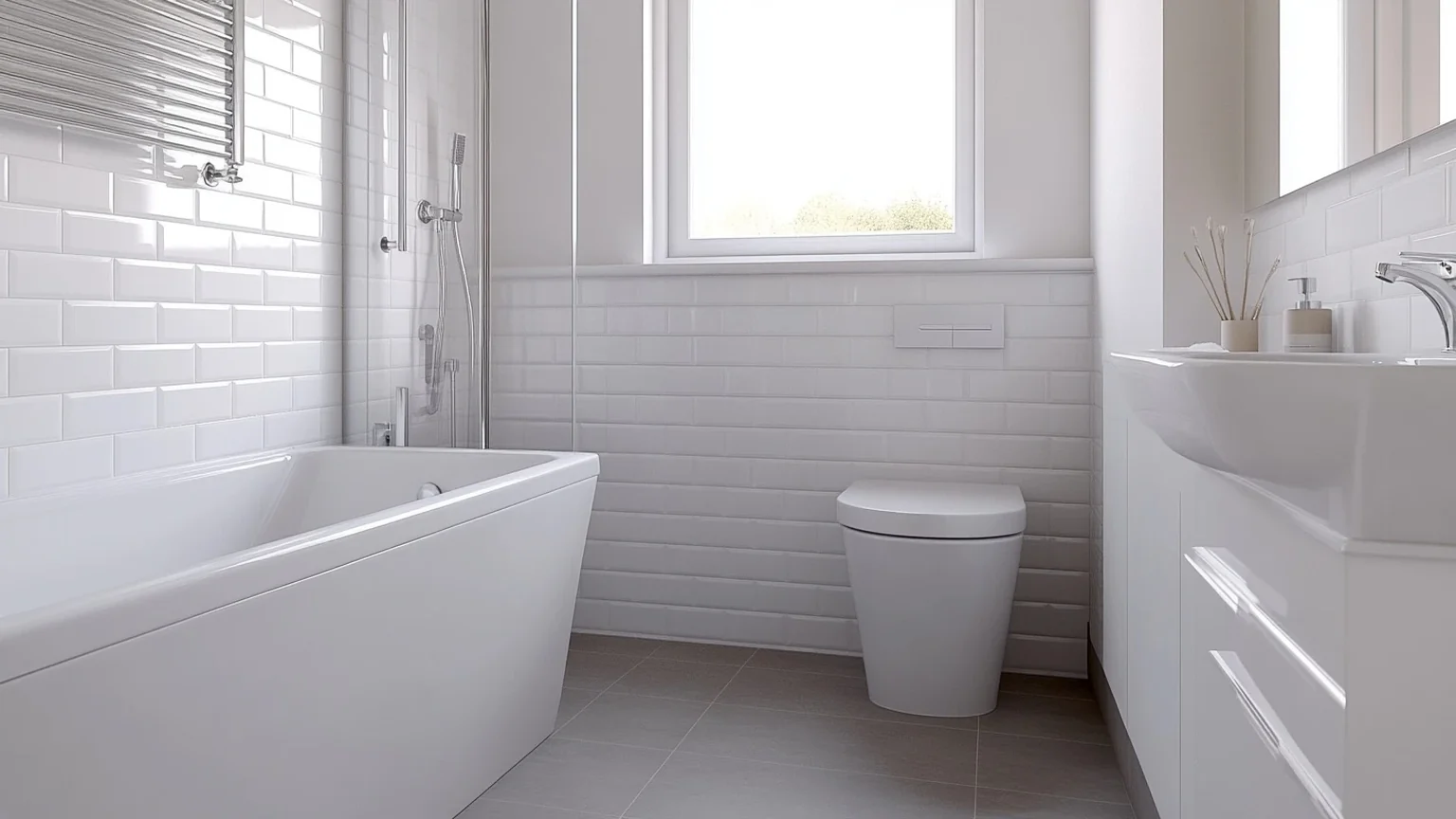
Neutral finishes age better than fashionable ones. They do not date as fast. White sanitaryware, chrome taps and a mid-tone floor stay current far longer than a trend.
Keep a simple record of what you fitted. Note the models and finishes. Note where the shut-off valves are. It makes each repair quicker and cheaper. It also passes on if you sell or change agent.
Before any work starts, read the Citizens Advice guide to getting building work done. It covers quotes, contracts and what to check.
Speak to AV Modern Bathrooms
Planning a rental property bathroom? We can advise on fittings that cope with tenant use. We plan the fan and wiring from the start. You get a free home visit and a written price before we order anything.
Read about our bathroom renovation service, see the gallery, or visit the showroom. We cover rented homes across the areas we cover, including Liverpool and Warrington. To discuss a property, contact us.