
Bathroom styles
Tiled bathrooms
Tiled bathrooms look good and last for years. But the tiles are only the top layer. What sits under them decides how long they last.
- Free home visit and written price
- 12-month guarantee on every job
- Showroom in St Helens, open six days
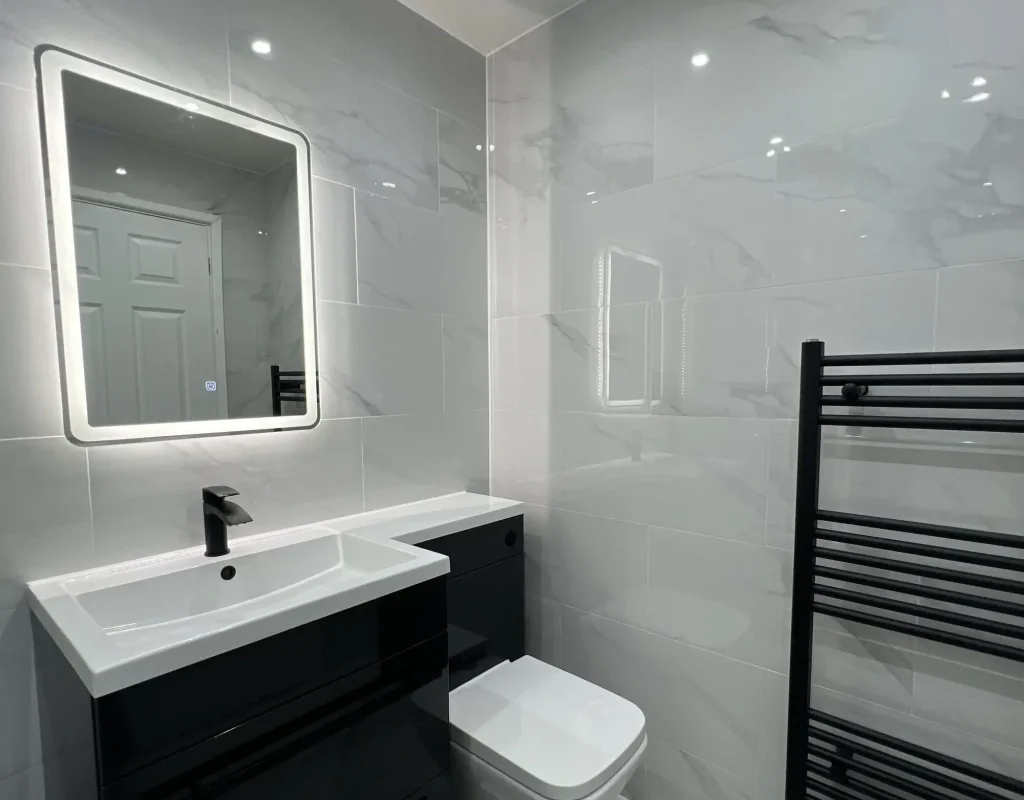
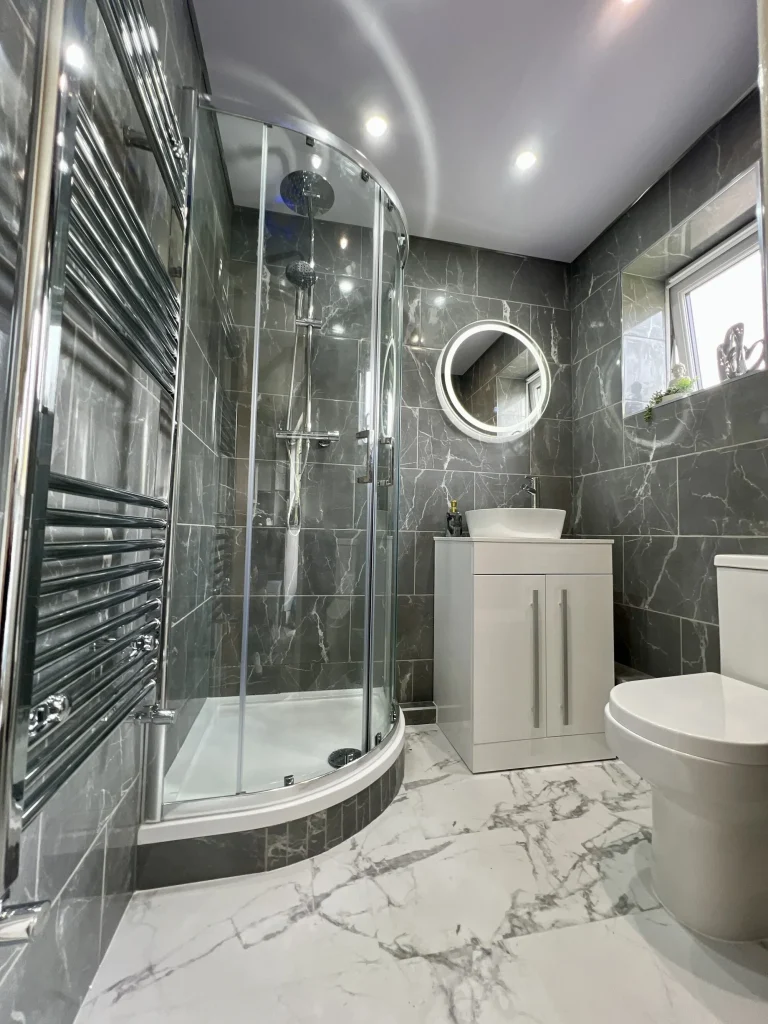
Which tiles are best for a tiled bathroom?
Most bathroom tiles are porcelain or ceramic. Both cope well with water and are easy to wipe clean.
Porcelain is denser and harder. It suits floors and shower areas. Ceramic is lighter and often costs less, so it is a good pick for walls.
Porcelain
Porcelain takes little water in, so it is a safe pick for wet areas. Large sheets give you fewer grout lines. See our porcelain bathrooms page.
Ceramic
Ceramic comes in many colours and shapes, from small metro tiles to wide wall tiles. It is best on walls. See our ceramic bathrooms page.
Mosaics and wood effect
Mosaics suit a feature wall or a shower niche. Wood-effect porcelain gives a warm look with none of the upkeep of real wood.
How do you pick a floor tile that is not slippery?
Wet tiles can be slippery. Look at the slip rating, not just the look of the tile.
A tile with a little grip is safer in the shower and on the floor. Small tiles have more grout lines, which also add grip. Ask us to show you the options at our St Helens showroom.
How do we prepare a bathroom for tiles?
Tiles stay put only on a firm, dry and flat base.
1
Strip back
We take off old tiles and loose plaster. We check the wall for damp.
2
Make it flat
We fix any weak spots. The wall must be flat or the tiles will look uneven.
3
Waterproof it
In a shower we seal the wall and floor first. This is called tanking.
4
Tile and grout
We set the tiles on strong adhesive. Then we fill the gaps with grout.
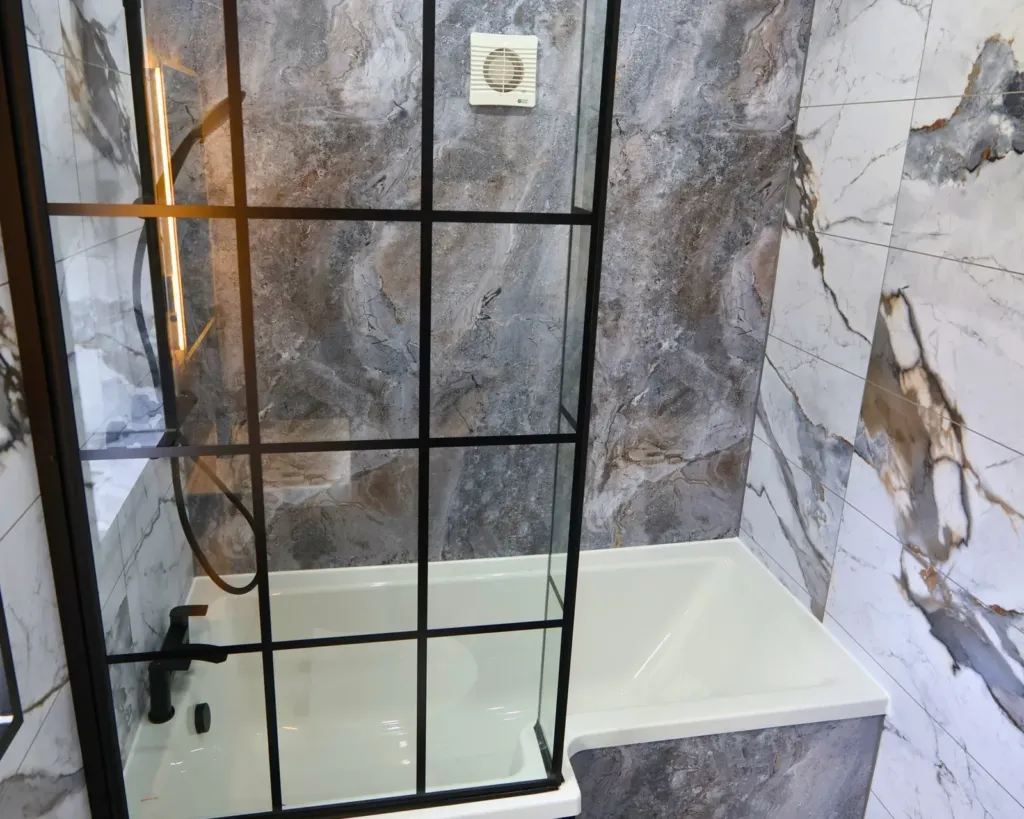
What are grout and sealant, and why do they matter?
Grout fills the gaps between tiles. Sealant (a flexible rubber-like strip) goes where tiles meet the bath, tray or corner.
Grout can crack if the wall moves, but sealant can flex. That is why corners and edges get sealant, not grout.
Fewer grout lines mean less to clean. Dark or mid-tone grout hides marks. Wipe the tiles after a shower and the grout will look good for longer.
The Tile Association is a good place to learn more about tile standards.
Old tiles and asbestos
Homes built before 2000 may have asbestos in old tiles, adhesive or floor backing. It is safe if left alone. It is not safe if you break it up.
If you think a tile or floor contains it, do not scrape or drill it. Read the HSE guide to asbestos in the home before work starts. Tell us at the home visit so we can plan around it.
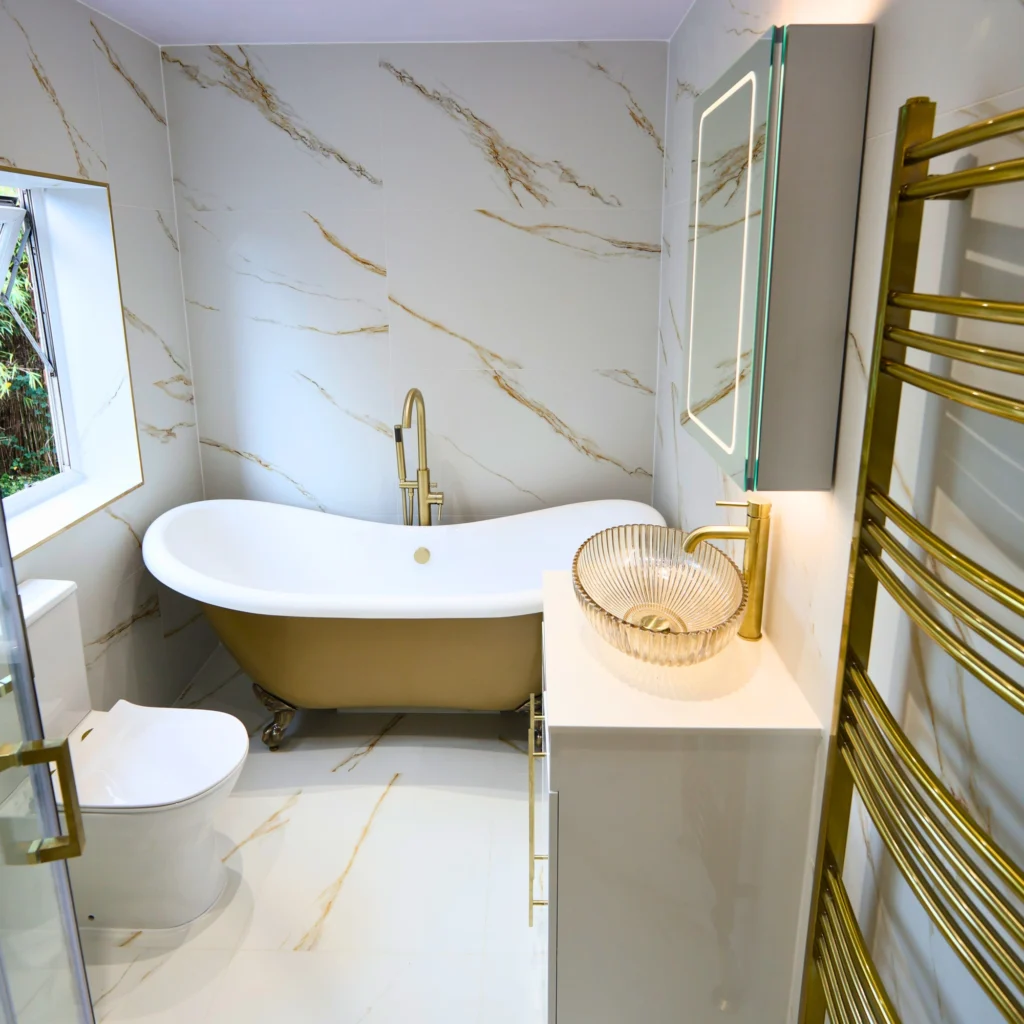
Tiles or wall panels: which suits you?
Tiles give the most choice and a hard finish. Panels have no grout and go up faster.
Many of our customers tile the shower area and panel the rest. Compare them in our PVC bathrooms and SPC tiles pages. If cost is the worry, read our budget bathrooms page.
As a guide, our ceramic tile package starts from £6,000 for a bathroom up to 4 m². A big tiled area adds to the time and cost.
How long does a tiled bathroom take?
A typical full bathroom takes around four days on site, as an estimate. Tiles need time to set before grouting.
A wet room or a layout change takes longer. See our wet room installations page.
The same team strips, plumbs, tiles and finishes the room, so you have one person to call. Tiling alone rarely needs approval, but new pipes or wiring can. The Planning Portal guide to bathroom work explains when, and it is the property owner’s job.
Plan your tiled bathroom with us
We measure your room for free and give you a written price. Nothing is ordered until you say yes.
Questions about tiled bathrooms
Is porcelain better than ceramic for a bathroom?
Porcelain is harder and takes in less water. Ceramic is fine on walls and often costs less.
Can you tile over my old tiles?
Sometimes. The old tiles must be firm, flat and dry. We check at the home visit.
How big should bathroom tiles be?
Large tiles mean fewer grout lines and a calmer look. Small tiles suit curves and small rooms.
Do tiles need to be sealed?
Porcelain and glazed ceramic do not. The grout can be sealed, and the corners get flexible sealant.
Why is my grout turning dark?
Damp, soap and poor airflow cause it. A good fan and a wipe after showers help.
What is tanking?
It is a waterproof layer under the tiles in a shower. It stops water reaching the wall behind.
How do I clean tiled walls?
Use a mild cleaner and a soft cloth. Avoid harsh scrubbing on the grout.
Do tiled bathrooms cost more than panelled ones?
Usually, yes. Tiles cost more to buy and take longer to fit.
Can I choose tiles before the home visit?
Yes, or we can pick them with you after. You can see samples at our showroom.
What if you find asbestos in old tiles?
We stop and tell you. Testing and removal are done by a licensed specialist.
Can I have underfloor heating under tiles?
Yes, in most rooms. We plan it at the home visit, as it affects the floor height.
Which tile brands do you fit?
We fit tiles from brands such as Tiles UK, alongside K-Vit, Nuie, MB and Hudson Reed. Our supply partner is TikiTaki Bathrooms.
Free home visit
Tell us about your bathroom
Leave your details and we will call you back. We measure up at home and send a written price. There is no obligation.
- We reply in working hours, Monday to Saturday
- You get a written price before anything is ordered
- Prefer to talk? Call 01942 365 989
Book a free home visit
Start with your postcode so we can check we cover your area.
We use your details only to arrange the visit and send the quotation. Privacy notice.