

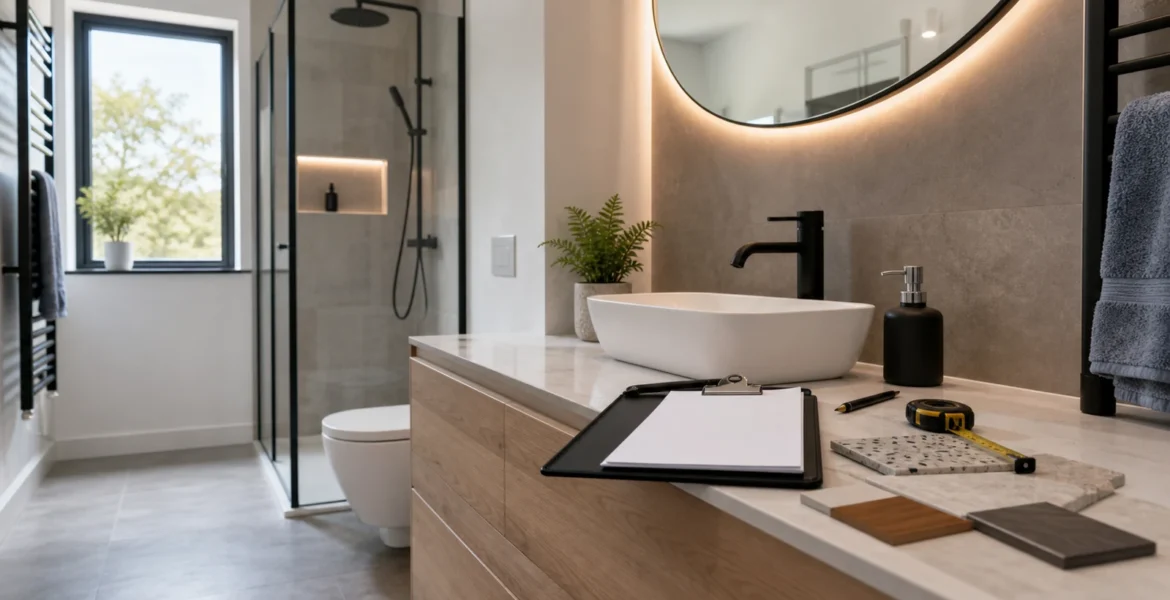
What to Ask Bathroom Fitters Before You Renovate
Choosing bathroom fitters is one of the most important decisions in a renovation. The right team can help you plan a bathroom that looks good, works properly and is fitted with care. The wrong choice can leave you with vague quotes, delays, poor finishing and problems that are difficult to fix later.
Before you commit, it is worth asking practical questions. Not awkward questions, just sensible ones. A good bathroom renovation company should be happy to explain how they work, what is included, and what needs to be decided before installation starts.
AV Modern Bathrooms provides bathroom renovation, design and fitting across St Helens and the North West. This guide gives you the key questions to ask before hiring bathroom fitters for your home.
Questions About the Work Itself
Start with the basics. You need to understand what the fitter is actually pricing for. Does the quote include strip-out, waste removal, plumbing, electrics, wall preparation, flooring, tiling or panels, fitting, finishing and a final check? If the answer is unclear, the quote may be difficult to compare.
Ask whether the team can help with design and layout, or whether they only fit products chosen elsewhere. For a full bathroom renovation, design and installation should work together. A layout that looks fine on paper may need adjusting once pipework, door swings, shower screens and storage are considered.
Questions About Trust, Planning and Finish
A bathroom renovation takes place inside your home, so trust matters. You should feel comfortable asking how the project will be managed, how disruption will be handled, and who you will speak to if a decision needs making during the job.
Good bathroom fitters should also be honest about constraints. If something is not practical, they should say so early. If a cheaper option may cause maintenance issues later, they should explain the trade-off clearly rather than simply agreeing to everything.
Can you explain the quote clearly?
A useful quote should show what is included and what is not. It should not rely on vague phrases that leave important work open to interpretation. If electrical work, disposal, preparation or finishing are excluded, you need to know before the project begins.
Do not compare quotes by the final number alone. A cheaper quote may be missing key parts of the work. A higher quote may include better preparation, more reliable materials or a more complete service. Clarity is more important than a low headline figure.
Who handles plumbing and electrics?
Bathroom renovations often involve plumbing, electrics, ventilation and sometimes structural considerations. Ask how these trades are handled and whether the work will be completed by suitable people.
You do not need every technical detail, but you should be confident that the team understands bathroom safety and compliance. If lighting, fans, shaver points or illuminated mirrors are part of the plan, electrical work needs proper attention.
How will the bathroom be protected from moisture?
Waterproofing, sealant, wall preparation and ventilation have a huge effect on how long the bathroom lasts. Ask how the shower area will be prepared, what wall finishes are suitable, and how moisture will be managed.
This question is especially important if your current bathroom has mould, loose tiles, leaks or damaged flooring. A renovation should fix the cause of those issues, not simply cover them with new surfaces.
What happens if hidden problems are found?
Bathrooms can hide problems behind tiles, under baths and below flooring. Once the old suite is removed, the fitter may find damaged boards, awkward pipework, poor previous repairs or walls that need extra preparation.
Ask how those issues are discussed and priced. A professional team should explain the problem, give you options where possible, and avoid making changes without agreement.
How will the project be managed?
It helps to know who will be on site, who orders materials, who coordinates trades, and how updates will be given. Even a straightforward bathroom refurbishment needs organisation if the job is to run smoothly.
The Health and Safety Executive has guidance on using contractors, which is a useful reminder that planning, communication and clear responsibilities matter when work is carried out. For homeowners, the practical version is simple: know who is responsible for what before work starts.
Can you advise on layout, storage and daily use?
A bathroom fitter should not only install what is already chosen. The best conversations include how the room will be used day to day. Ask about storage, cleaning, shower access, lighting, towel rails and whether the layout will feel comfortable once everything is fitted.
This is particularly important in small bathrooms, ensuites and older homes. A small change in basin size, shower screen position or vanity depth can make the room much easier to use.
What materials suit this bathroom?
Different bathrooms need different materials. A family bathroom needs durability and easy cleaning. A compact ensuite may need space-saving fittings. A shower-heavy bathroom needs wall finishes that can cope with frequent moisture.
Ask about the pros and cons of tiles, wall panels, flooring options, vanity materials and brassware finishes. A helpful fitter should be able to explain trade-offs rather than pushing one option for every room.
How will the home be left each day?
Bathroom renovations can be disruptive, especially if there is only one bathroom in the house. Ask how the team handles dust, access, waste, tools and daily tidy-up. You should know whether the room will be usable at any stage and what arrangements may be needed while work is underway.
This is not about expecting a dust-free building project. It is about knowing that the work will be managed with care. Clear expectations make the process easier for both the homeowner and the fitter.
What does a good finish look like?
Before hiring anyone, ask what they check before the job is signed off. A proper finish includes more than a quick clean. Taps, wastes, shower screens, seals, drawers, lighting, ventilation and water flow should all be checked.
It is also worth asking how snagging is handled. Small finishing details can happen on any project, but they should be dealt with professionally. A fitter who has a clear sign-off process is usually easier to work with than one who disappears as soon as the last fitting is installed.
Can I see examples of similar work?
Photos of previous work help you understand the standard of finishing and the kind of bathrooms the company is used to fitting. Look for neat sealant, aligned tiles or panels, tidy pipework, balanced layouts and bathrooms that feel practical rather than over-styled.
You can view examples on the AV Modern Bathrooms gallery. If you are in a specific area, it is also worth checking the areas covered to see local service information.
Speak to AV Modern Bathrooms
If you are planning a bathroom renovation in St Helens, Warrington, Liverpool, Manchester, Wirral or the wider North West, AV Modern Bathrooms can help you ask the right questions before work begins. The team can advise on design, fitting, materials, layout and practical installation choices.
Learn more about the bathroom renovation service or contact AV Modern Bathrooms to discuss your project and request a tailored quote.