

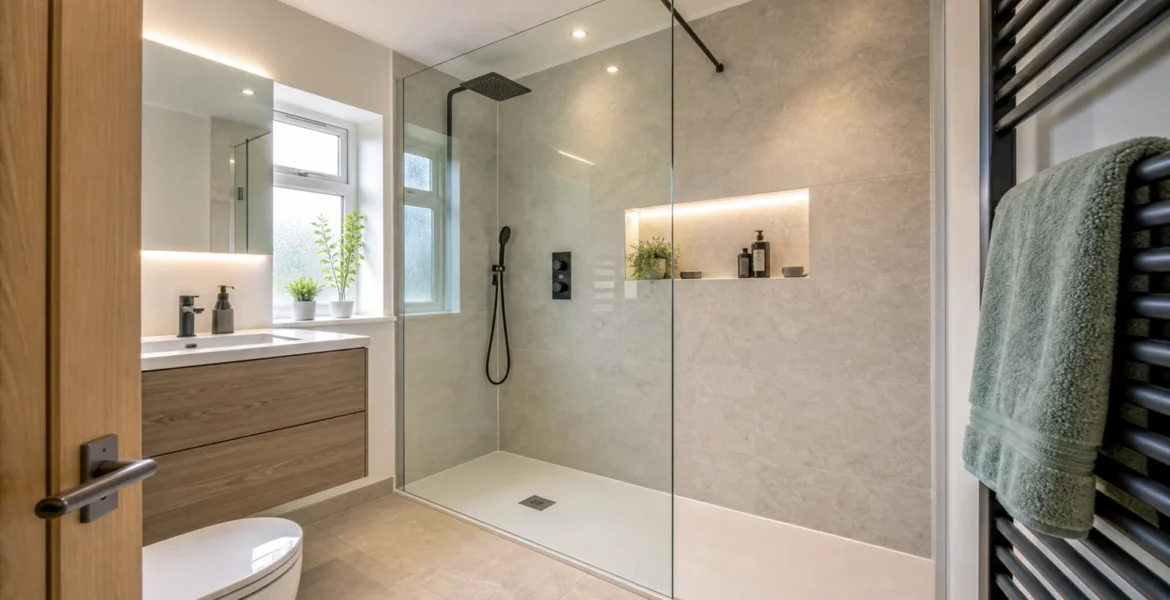
Walk-In Shower Renovation: Replacing a Bath Properly
A walk-in shower renovation can make a bathroom feel easier to use, cleaner and more modern. For many homeowners, replacing a bath with a walk-in shower is one of the most useful changes in a full bathroom renovation, especially when the bath is rarely used.
It is not a decision to rush, though. A walk-in shower needs the right tray, screen, drainage, waterproofing, wall finish and layout. If those details are not planned properly, the result can be splashy, cramped or difficult to maintain.
AV Modern Bathrooms designs and fits bathroom renovations across St Helens and the North West. This guide explains what to consider before removing a bath and installing a walk-in shower.
Is a Walk-In Shower Right for Your Bathroom?
A walk-in shower works best when it improves the way the room is used. If the existing bath takes up too much space, feels awkward to step into, or is only used as a shower area, replacing it may be a sensible upgrade. It can also help create a cleaner layout in smaller bathrooms.
However, the right choice depends on the household. Some families still prefer a bath for young children, pets or occasional use. If the bathroom is the only one in the house, think carefully before removing the bath completely. A renovation should suit daily life, not just follow a trend.
What Needs to Be Planned?
The visible part of a walk-in shower is simple: tray, glass, shower controls and wall finish. The important work sits behind that. Drainage, waterproofing, floor levels, pipe routes, water pressure and extraction all affect whether the shower performs well.
A professional bathroom renovation should deal with those points before the final finish is chosen. That way, the shower is designed around the room rather than forced into a space that does not suit it.
Tray size and shower position
The shower tray needs to be large enough to feel comfortable but not so large that it steals space from the rest of the bathroom. In many UK homes, the old bath footprint can provide a useful starting point, but it still needs checking against the doorway, toilet, basin and towel rail.
The position of the shower head and controls also matters. You should be able to turn the shower on without standing directly under cold water. The screen should protect the room from splashes without making entry awkward.
Drainage and floor levels
Good drainage is essential. A low-profile tray can look neat, but it still needs the right waste position and enough fall for water to drain away properly. If the existing plumbing does not line up, extra work may be needed to make the installation reliable.
Floor condition should also be checked. Once the bath is removed, the subfloor may reveal old water marks, uneven areas or previous repairs. These should be addressed before the new tray and flooring are installed.
Wall finishes and waterproofing
Shower areas take more water than almost any other part of the home. Whether you choose tiles or wall panels, the surface behind and around the shower must be prepared correctly. A nice finish will not compensate for weak waterproofing.
Wall panels can reduce grout lines and make cleaning easier. Tiles can provide a more traditional or premium finish. The best option depends on the look you want, the room size, the budget and how much maintenance you are prepared to do.
Lighting, electrics and extraction
Replacing a bath with a walk-in shower can change where light is needed. The shower area may need better ceiling lighting, the mirror may need clearer task lighting, and the extractor fan may need reviewing if steam builds up quickly.
Bathroom electrical work should be handled safely because bathrooms are wet environments. GOV.UK’s Approved Document P gives guidance on electrical safety in dwellings, and it is sensible to discuss lighting, fans and electrical accessories as part of the renovation plan.
Accessibility without a clinical look
A walk-in shower can make a bathroom easier to use without making it feel clinical. Low-profile trays, wider entries, thoughtful screen placement and well-positioned storage can all improve comfort for everyday use.
If future access is a concern, talk about it early. It is easier to plan support, clearances and layout before the room is fitted than to change everything later. Practical does not have to mean plain.
Storage inside the shower
Shampoo bottles on the floor can make even a new shower feel untidy. Built-in niches, neat corner shelves or discreet storage can keep the shower easier to clean and safer to use.
Think about how many people use the bathroom and what needs to be stored. A couple of simple shelves may be enough for an ensuite, while a family bathroom may need more robust storage.
Cleaning and long-term maintenance
Walk-in showers are popular partly because they can be easier to clean, but that depends on the design. Large glass panels, poor drainage or too many awkward corners can still create maintenance problems.
Ask how the screen, tray, wall finish and sealant should be cleaned. Choosing durable, suitable materials at the start can make the bathroom feel better for longer.
Replacing the bath in a family home
If the bathroom is the only one in the property, take a moment to think about resale and family use. Some buyers like having a bath, especially in family homes. That does not mean you must keep one, but it does mean the decision should be deliberate.
In many homes, a practical shower is still the better choice because it matches daily routines. The point is to avoid removing the bath purely because it is fashionable. A renovation should solve a real problem, whether that is access, cleaning, wasted space or a bathroom that no longer suits the household.
Choosing glass and screen details
The screen has a big effect on how the shower performs. A panel that is too short may let water escape, while a screen that is too large can make the bathroom harder to enter and clean. Hinges, fixed panels and return screens all behave differently in a compact room.
Think about how the glass will be wiped down, where water will land, and whether there is enough space to move comfortably. The best walk-in shower is not always the largest one; it is the one that fits the room properly.
How it affects the rest of the room
Replacing a bath can free up space, but the whole room should still feel balanced. The basin, toilet, radiator, towel storage and door swing all need to work with the new shower. A walk-in shower should improve the bathroom, not dominate it.
Use the renovation as an opportunity to fix other issues too. Better storage, improved ventilation, new flooring and updated lighting can make the change feel like a complete bathroom improvement rather than one isolated replacement.
Speak to AV Modern Bathrooms
If you are thinking about replacing a bath with a walk-in shower, AV Modern Bathrooms can help you plan the layout, materials and installation properly. The team works across St Helens, Warrington, Liverpool, Manchester, Wirral and nearby North West areas.
View examples in the bathroom gallery, explore the bathroom renovation service, or contact AV Modern Bathrooms to discuss your walk-in shower renovation.