

How Often Should You Renovate Your Bathroom?
If you are wondering how often you should renovate your bathroom, a useful rule of thumb is to review the room properly after around 10 to 15 years. That does not mean every bathroom must be ripped out on a fixed schedule, but it is a sensible point to check whether the layout, plumbing, ventilation, storage and finishes are still working as they should.
For many homeowners, a bathroom renovation becomes necessary sooner. A room that looks tired can often wait, but leaks, loose tiles, mould, poor airflow, damaged flooring or unreliable fittings should be taken seriously. These problems can affect daily comfort and, if ignored, may lead to more expensive work later.
At AV Modern Bathrooms, the focus is complete bathroom renovation, refurbishment, design and fitting for homes across St Helens, Liverpool, Manchester, Warrington, Wirral and the wider North West. This guide explains when a renovation is worth considering, what warning signs to look for, and how to plan the work properly.
A Practical Bathroom Renovation Timeline
Most well-fitted bathrooms can last for many years, especially when good materials are used and the room is properly ventilated. Around the 10-year mark, however, many bathrooms start to show signs of age. Sealant can discolour, grout can wear down, taps and showers may become less reliable, and the layout may no longer suit the way the household uses the space.
By 15 years, it is common for a bathroom to feel dated even if it still functions. Styles change, storage needs change, and older fixtures may no longer be as efficient or easy to maintain. A full bathroom renovation at this stage can improve comfort, reduce maintenance, and make the room more practical for everyday use.
When a Full Bathroom Renovation Makes Sense
A renovation is not only about replacing old tiles or choosing a new shower. The right time to renovate is when the bathroom no longer works properly for your home, your routine, or the condition of the property. That could mean dealing with hidden water damage, improving a poor layout, upgrading a dated suite, or creating a safer and easier-to-clean room.
If you are planning other home improvements, it can also be a good moment to look at the bathroom. Renovating at the right time can prevent repeat disruption and help you make better decisions about layout, materials, lighting and long-term use.
Age and everyday wear
Even a good bathroom takes a lot of daily use. Steam, water, cleaning products and constant foot traffic all have an effect over time. Older bathrooms often show wear through cracked grout, stained sealant, loose fittings, tired flooring, chipped baths, leaking taps or shower screens that no longer seal properly.
Some of these issues can be repaired individually. If several are happening at once, it may be more sensible to consider a complete bathroom refurbishment instead of paying for repeated small fixes. A renovation gives you the chance to deal with the room as a whole rather than patching one problem after another.
Leaks, damp and mould
Water problems are one of the clearest signs that a bathroom needs attention. A small leak around a bath, shower tray, toilet or basin can spread into flooring, walls and ceilings. Mould can also point to poor ventilation, failing sealant or surfaces that are not coping well with moisture.
If damp patches, peeling paint, soft flooring or persistent mould keep returning after cleaning, it is worth getting the bathroom inspected. In some cases, the issue may be simple. In others, the room may need new waterproofing, better ventilation, updated plumbing or a more suitable wall finish.
Poor layout and lack of storage
A bathroom can be in reasonable condition but still frustrating to use. Common layout problems include cramped shower access, doors that clash with furniture, wasted corners, awkward toilet positions, not enough storage, or a bath that no longer suits the household.
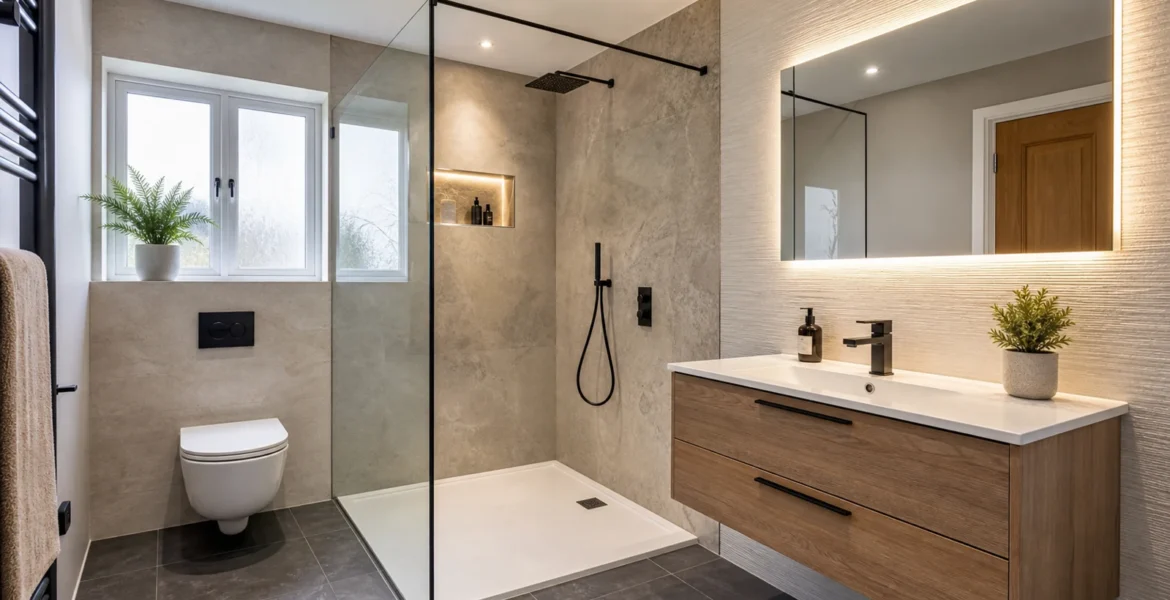
This is especially common in smaller UK bathrooms, where every part of the layout matters. A well-planned bathroom renovation can make a compact room feel calmer and more useful without necessarily increasing the physical size of the space. Better storage, improved lighting, a walk-in shower, wall-hung furniture or carefully chosen wall panels can all make a noticeable difference.
Outdated plumbing, electrics and ventilation
Bathrooms need more technical planning than many homeowners expect. Plumbing, electrics, waterproofing and ventilation all have to work together. If the room is old, it may not have the best extraction, the lighting may be poorly placed, or the pipework may limit what can be done with the layout.
Electrical work in bathrooms needs proper care because bathrooms are wet environments. The UK Government’s Approved Document P explains building regulations for electrical safety in dwellings. For homeowners, the practical point is simple: bathroom electrics should be handled by suitably qualified professionals, not treated as a quick DIY task.
Design, materials and cleaning
A renovation is a good opportunity to choose finishes that suit real daily use. Some homeowners prefer a fully tiled bathroom, while others want wall panels for easier cleaning. Porcelain, ceramic, SPC flooring and PVC panels can all work well in the right setting, but the best choice depends on the room, the budget, the style and how much maintenance you want.
It is also worth thinking about cleaning before choosing finishes. Large-format tiles can reduce grout lines, wall panels can make shower areas easier to wipe down, and good storage can stop toiletries from cluttering every surface. A bathroom that looks good on day one should also be practical six months later.
Cost and timescale
Bathroom renovation costs vary because every room is different. Size, layout, plumbing changes, electrical work, wall finishes, flooring, fixtures, waste removal and labour all affect the final price. A like-for-like refresh is usually very different from a full redesign with new pipework, shower position, lighting and fitted furniture.
The same applies to timescale. A straightforward refurbishment may be quicker than a complex renovation, but the quality of preparation matters. Rushing waterproofing, fitting or finishing work can create problems later. The most useful next step is to ask for a clear, itemised quote based on your actual bathroom rather than relying on generic averages.
What the renovation process usually includes
A complete bathroom renovation normally starts with a consultation and design discussion. This is where the layout, style, storage, shower or bath choice, wall finish, flooring and practical requirements are considered properly.
After that, the old bathroom is stripped out and the room is prepared for the new installation. Depending on the project, this may include plumbing adjustments, electrical work, wall preparation, waterproofing, flooring, tiling or panelling, fitting the suite, adding storage, and completing the final finishing details.
If you are still early in the planning stage, AV Modern Bathrooms’ step-by-step bathroom transformation guide is a useful follow-up read.
Local renovation considerations
Homes across St Helens and the wider North West vary widely. Older terraces, family homes, flats and newer properties can all have different bathroom challenges. Some rooms need better ventilation, some need smarter storage, and some need a layout that makes better use of limited floor space.
Working with a local bathroom renovation company can make planning easier because the team understands common property types in the area and can advise on practical choices. You can also view local service coverage through the areas covered page.
Maintaining your bathroom after renovation
Once the renovation is complete, simple maintenance helps protect the investment. Use the extractor fan properly, wipe down wet areas, avoid harsh abrasive products on delicate finishes, and check sealant and grout periodically. Small maintenance habits can help prevent mould, staining and premature wear.
It is also sensible to keep an eye on taps, wastes, shower screens and silicone joints. Catching minor issues early is much easier than waiting until water damage appears. A well-planned bathroom should be easy to look after, not just attractive when newly installed.
Speak to AV Modern Bathrooms
If your bathroom is 10 to 15 years old, showing signs of water damage, difficult to clean, or no longer practical for your household, it may be time to consider a renovation. The right design can improve comfort, storage, safety, ventilation and long-term usability.
AV Modern Bathrooms provides bathroom renovation, refurbishment, design and fitting for homeowners across St Helens and the North West. You can view the gallery for ideas, or contact AV Modern Bathrooms to discuss your bathroom renovation and request a tailored quote.