

Bathroom Refurbishment vs Renovation: Which Do You Need?
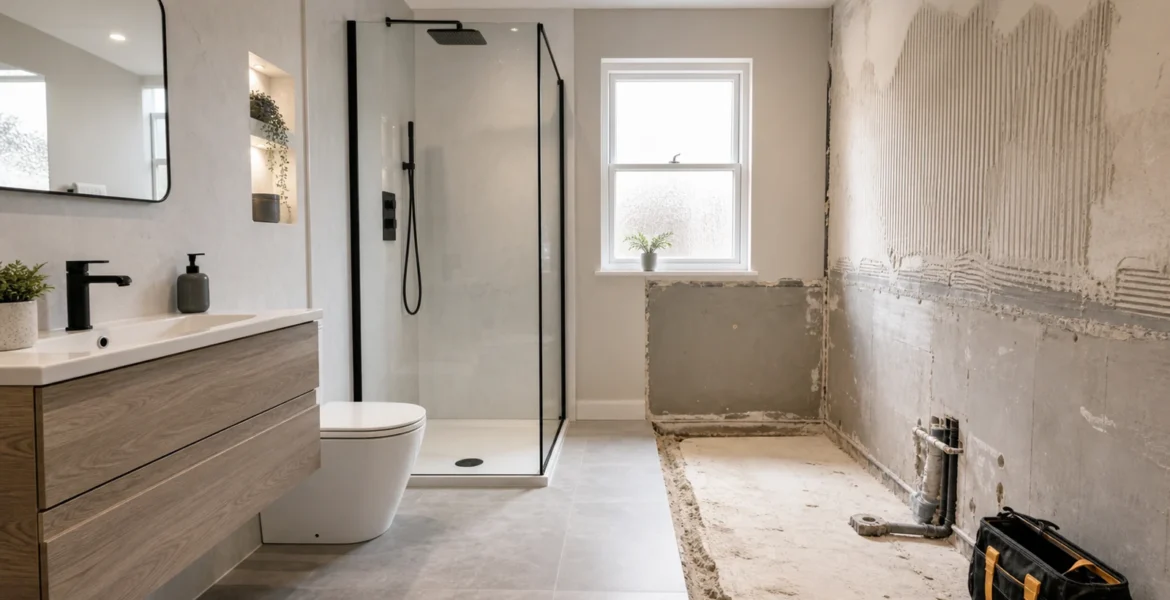
Bathroom refurbishment and bathroom renovation are often used as if they mean the same thing, but they can involve very different levels of work. A refurbishment usually improves what is already there. A renovation goes deeper, dealing with the layout, plumbing, electrics, surfaces and overall design of the room.
Knowing the difference matters because it affects budget, timescale and expectations. If your bathroom only looks dated, a refurbishment may be enough. If the layout is poor, the shower leaks, ventilation is weak or the room no longer suits your home, a full bathroom renovation may be the better long-term choice.
AV Modern Bathrooms works with homeowners across St Helens, Liverpool, Manchester, Warrington, Wirral and the North West. This guide explains how to decide which route makes sense before you start choosing colours and fittings.
What Is the Difference?
A bathroom refurbishment is normally a lighter improvement. It may include replacing taps, updating a basin, fitting new storage, refreshing wall finishes, changing a shower screen, renewing sealant or improving small details that make the room feel cleaner and more modern.
A bathroom renovation is more complete. It may involve stripping the room back, changing the layout, replacing the bath with a walk-in shower, installing new pipework, updating lighting, improving ventilation, fitting new wall and floor finishes, and rebuilding the bathroom around the way the household uses it.
How to Choose the Right Level of Work
The right choice depends on the current condition of the bathroom and what you want to achieve. If you are only unhappy with the style, start by asking whether the existing layout works. If the answer is yes, refurbishment may be enough. If the room is awkward, damp, hard to clean or showing signs of failure, renovation usually gives better value.
It is worth being honest at this stage. A quick refresh can look good for a short time, but it will not solve hidden leaks, poor ventilation or an uncomfortable layout. A full renovation costs more because it deals with more of the room, but it can prevent repeated repairs and make the bathroom much easier to live with.
When a refurbishment may be enough
A refurbishment can work well if the bathroom is structurally sound, the plumbing is reliable, and the layout still suits your routine. For example, you might keep the bath and toilet in the same place but update the vanity, wall panels, mirror, lighting and accessories.
This kind of project is often useful when a bathroom feels tired but not broken. It can also be suitable if you are preparing a home for sale and want the room to look cleaner and more inviting without changing the layout completely.
When renovation is the better option
A full renovation is usually the better option when the bathroom has persistent problems. Leaks, damp smells, soft flooring, cracked tiles, poor ventilation, mould that keeps coming back, unreliable fittings or bad layout choices are all signs that a surface refresh may not be enough.
Renovation is also worth considering when the room no longer matches your lifestyle. A household that rarely uses a bath may benefit from a walk-in shower. A family bathroom may need stronger storage. A small ensuite may need a simpler layout and better lighting.
Ventilation should not be an afterthought
Ventilation is one of the details that separates a cosmetic update from a properly planned bathroom project. A fresh finish will not last as well if moisture cannot leave the room. Condensation can affect paint, sealant, grout, furniture and even nearby walls.
The Planning Portal explains the need for additional ventilation in kitchens and bathrooms on its bathroom ventilation guidance. If your bathroom is internal, has a weak extractor, or has recurring mould, ventilation should be discussed early rather than treated as a final detail.
Think about the hidden work
The visible bathroom is only part of the project. Behind the tiles or panels there may be uneven walls, old pipework, poor previous repairs or surfaces that need proper preparation. These hidden details influence whether refurbishment is sensible.
A good bathroom fitter will not simply cover problems and hope for the best. They should explain what can be reused, what should be replaced, and what preparation is needed before new finishes are installed.
Material choices affect both routes
Whether you refurbish or renovate, materials should suit the way the room is used. Wall panels may appeal if you want fewer grout lines and easier cleaning. Porcelain or ceramic tiles may suit a more traditional tiled finish. Storage, mirrors, flooring and shower screens should all be chosen for daily practicality as well as appearance.
It is easy to spend money on items that look impressive but do not solve the real problem. If the bathroom is short on storage, focus there first. If cleaning is difficult, consider surface choices. If access is awkward, look at the layout before choosing decorative finishes.
Do not let old problems set the new design
One mistake homeowners make is designing around the old bathroom simply because that is what is already there. The existing layout may only exist because it was the easiest option years ago, not because it is the best use of the room now.
During a renovation, it is worth asking whether the bath, basin, toilet and storage are in the right places. Even if you decide not to move everything, the conversation can reveal small improvements. A slimmer vanity, better shower screen or different radiator position may make the bathroom feel much less cramped.
When a staged approach makes sense
Sometimes homeowners are tempted to do a small refurbishment now and a full renovation later. That can work if the current bathroom is safe, dry and functional. It is less sensible if the room already has leaks, weak flooring or recurring mould, because the later renovation may have to undo the earlier spending.
If you are weighing up a staged approach, be clear about the lifespan you expect from the first phase. A short-term refresh should be priced and chosen as a short-term refresh, not treated like a permanent solution.
Cost and disruption
A refurbishment is usually less disruptive than a full renovation, but it still needs careful planning. Even small jobs can become awkward if parts are ordered in the wrong sequence or if hidden issues are found once old fittings are removed.
A renovation involves more work, but it also gives more control. You can rethink the room properly, improve ventilation, choose better storage, update lighting and create a bathroom that feels coherent rather than patched together.
How a consultation helps
If you are not sure which route you need, a consultation can save a lot of guessing. A bathroom specialist can inspect the room, ask how it is used, and point out whether the main issues are cosmetic, practical or technical.
You can also use the step-by-step bathroom transformation guide to think through your priorities before speaking to a fitter.
Speak to AV Modern Bathrooms
If your bathroom needs more than a quick tidy-up, AV Modern Bathrooms can help you decide between refurbishment and full renovation. The team works on bathroom design, fitting and installation across St Helens and the wider North West.
View the gallery for ideas, learn more about bathroom renovation services, or contact AV Modern Bathrooms to discuss the right level of work for your home.